Thursday, 1 March 2012

A DAY OUT WITH THE BIRDS :by Esther Moraa

On a typical day, one would not miss  to spot the white rumped swift, commonly referred to as miniature ‘jet fighter’ on the skyline. It is amazing how they glide in the sky in numbers without colliding.  

This reminds me of the marabou stork 
often referred to as ’Boeing 747’ by the locals due to the length of its wings and its style of landing and taking off. These birds migrate from the wild to the city due to ease availability of garbage heaps that provide them with food, where they compete with the pied crow and black kite.

 
Before an alarm goes on every morning, one can never ignore the laughing dove
 as it flaps making it’s loud continuous hum as if reminding you to wake up, just like in the jungle, one can not miss to spot the speckled dove and the ring necked dove that have colonized the sky.
However, with the growth of urban centers, infrastructure comes up every day at the expense of biodiversity which often leads to complains by city dwellers of birds messing their walls. Question is, if their home has been invaded by urbanization, where do should these birds find shelter?
Ever asked yourself why you find beautiful scenes of birds at the leafy suburbs? One appreciates the beauty when watching birds like the love


 bridgessun bird, and the ever majestic purple breasted sunbird, jump from one hibiscus flower to the lantana camara seeking out the little available nectar, the golden breast sterling and the greater blue eared sterling chasing after a harmless grasshopper, the beauty they display makes the environment so full of life.
 Conversely, the ongoing construction in the cities has left many foundations uncompleted leading to occurrences of wetlands. The dug up foundations get filled with water, creating room for aquatic plants like the water hyacinth, water lilies and the papyrus reeds to grow. Birds that love submerging in the water like the hammer kop
 , take this opportunity to search for tadpoles and fish. The hadada ibis, one of Africa’s best bird known to produce loud sounds, and the sacred ibises will be seen busy searching for the elusive worms and snails at the wetlands.
 
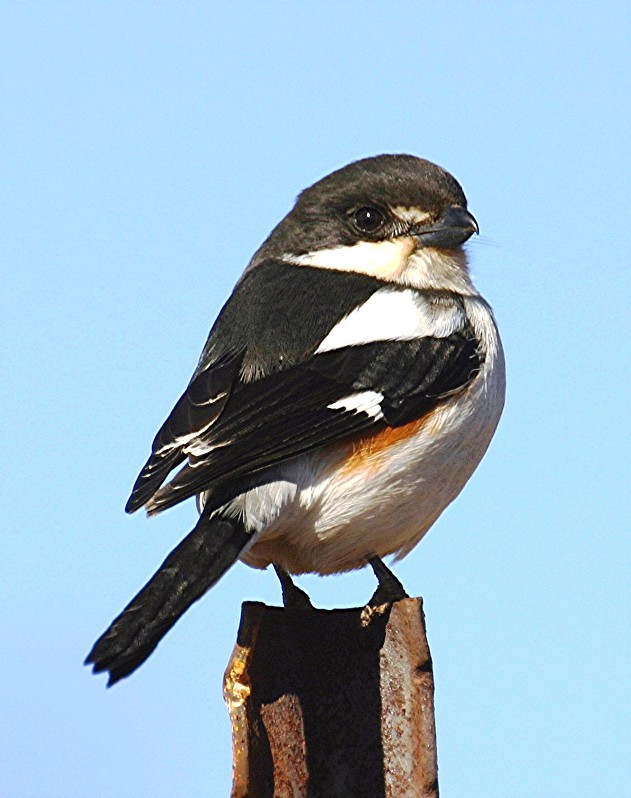
Bird watching is an interesting activity that one could engage in as a hobby,  a career (bird guide) or as a researcher (ornithologist). Looking at the power lines around the city, one would not fail to spot a lonely fiscal shrike or a long tailed fiscal that is ready to pounce on an unsuspecting grasshopper. 
 An African pied wag tail with it’s fascinating up and down movement or the black headed weaver and rofous sparrow which live near human habitation where they construct their nests to attract the females on the selected tree species like the Naivasha acacia will not also miss on sight. These birds make the most noise of all the bird species and construct their nests on one side of a tree.
All in all, for us to retain these beautiful scenes, let us conserve our environment lest we loose our .beloved gem!


Monday, 27 February 2012

ACID MINE DRAINAGE :by Esther Moraa Onderi


Acid Mine Drainage(AMD) is the second biggest environmental threat in the world. It occurs when water flows over or through sulphur bearing materials forming solutions of net acidity. It mainly comes from abandoned mines and currently active mining.
AMD is formed when Pyrite, an iron sulfide is exposed and reacts with air and water to form sulphuric acid and dissolved iron. The iron can precipitate to form the red, orange or yellow sediments in the bottom of streams containing mine drainage. The acid runoff further dissolves heavy materials such as copper, lead, mercury into the ground waters.
Speaking to John Jagero, an expert in water and environmental matters said “With all these metals contaminating water, it makes it unsafe for human consumption and also disrupts growth and reproduction of aquatic plants and animals.” He also added that AMD has corroding effect of acid on parts of infrastructure such as bridges.
Following the Kenya Mining Bill that is currently being drafted to conform to the new constitution, adequate measures are expected to be developed to avoid AMD occurrence.  Coal mining in Kenya is a key component of the country’s development of the blueprint Vision 2030, when Kenya is expected to join the countries with middle economies. However, before these mining activities are put to effect, the government is expected to carry out proper environmental impact assessment to avoid conflicting with the community and putting them at risk of using contaminated water.
 
Question is, does this conform with the current award to a Chinese company to mine coal in Kitui? With the knowledge of scarcity of water in Ukambani, how will the company avoid AMD since mines are supposed to be developed in a manner which utilizes gravity drainage to avoid excessive water accumulation in the mines.

 
From a global outlook, it has been confirmed that after more than a century of intense mining activities in South Africa, parts of Witwatersrand basin already has risks of spillage flows into Wonderfonteinspruit and Tweelowpiespruit, which will threaten the Krugersdrop game reserve and the cradle of human kind. The Robinson dam is now said to be radioactive with uranium levels 40,000times higher than normal levels and is said to glow in the dark.  
On the same, at the central basin, the ERPM Company ceased pumping water in 2008. As of September 2010 the water level was 545m below the surface with an average daily rise over the past year. The danger is that millions of liters could be seen of highly acidic mine water rising up under Johannesburg, and if left unchecked, it could spill out into the streets as early as this year (2012)
Given the foregoing, it is imperative for the companies charged with mining to apply mining methods which are eco-friendly to neutralize acidity and remove heavy metals to reduce AMD, however on affected mining sites, long term solutions are to be adopted like treating water for indirect use. If mining activities are left unchecked, the result could be hazardous.     


Saturday, 25 February 2012

MISSING PARADISE :By Esther Moraa

I have always loved my stay upcountry because of the serene environs; the cool fresh air accompanied with the peace and quiet. This is a package one really misses once in the urban centers. Ever had that feeling of exhaustion filled with suffocation? How about you visit a town like Nairobi or Kisumu and experience the chaos that are irresistible however much you may try to dodge them.
I remember this year when I arrived to Nairobi from upcountry after my Christmas holidays, i alighted at the Central Business District (CBD) for it was easier to commute to my destination from there, however, the disaster awaiting my arrival was devastating; matatus playing loud music to woo passengers, stalls competing to attract customers by playing loud music, hawkers shouting at the top of their voices to convince unwilling customers, vehicles hooting unnecessarily, the whole scenario was unbearable!  
So, I board another vehicle for my final destination, Buruburu. Approaching the estate was more frustrating than what I had just encountered in town. From all I could see outside my window was heart breaking, and the question that kept running through my mind was, ‘when did residents become so careless in the conservation of their environment?’ I could see dumpsites in different corners, garbage in the drainage systems and along the roads, so what happened to the proper disposal of garbage and use of the drainage systems?
 
However, I do not entirely blame the residents for this un-shameful behavior of disrespecting Mother Nature, there is a system put in place where different companies are given a tender to collect garbage from different estates and drop them at a particular location. Given that they are paid for these services by residents, why is it that they fail to carry out their duties as required?
 Finally, I arrive at home and as I alighted from the vehicle, I was really touched when I saw children playing with dirty water that someone had carelessly poured outside. Doesn’t it strike to people that this could be a health hazard? Exposed to such unhygienic conditions, these children are exposed to life threatening diseases since they are vulnerable.


One lesson we should all learn is that conserving the environment starts with us. We should take charge of our environment because the change we all want starts with us. It all starts with self discipline. For instance, if one has done laundry at their home, it wouldn’t be a difficult task for someone to take that water and use it to wash his/her toilet, instead of throwing organic waste from the kitchen and littering the streets, one should use it as manure in the  garden.
 
Becoming eco friendly is not rocket science, few aspects can be applied like separating organic and inorganic waste instead of mixing them, plant trees in open places in an effort of curbing global warming, adding aesthetic beauty, providing shade and offer home to birds. Drainage channels should never be encroached as this tends to block them resulting to spillage of grey waste which posses a health risk to the general population with outbreaks of diseases like dysentery, cholera, typhoid fever since they can contaminate clean drinking water. Take charge in environmental conservation!

Wednesday, 22 February 2012

IDEAL COMMUNITY EMPOWERMENT (Ideal Environment) FOSTERS ENVIRONMENTAL UPGRADE IN SCHOOLS by Esther Moraa Onderi

For 30 years, Umoja Primary School has stood on the 10 hectares of land in Nairobi’s Eastlands Umoja Estate.  With over 1000 pupils, the school has shaped several thousands of scholars who have excelled and joined National, Provincial, District and Private high schools and later undertook different professions.
With 4 blocks and 36 classes, Umoja Primary has since seen a transformation in its environment in line with Environmental conservation strategy set by the management to ensure serenity of the learning platform.

A visit to the school revealed that the strategy that has been implemented for the past years has ensured enough canopies for beautification of the school and serve as shelter to the pupils and the teachers during recess.
On a normal working day you will find Mr. Mbugua, the deputy head teacher on his chores to make certain the smooth running of the institution has he makes routine round checks.

 
From the classes to the kitchen and the latrines he together with the assigned teacher on duty, the soft spoken Mbugua ensures the activities of the institution are adhered to in accordance to the set up parameters.
Trees are part of the larger plan to increase the forest cover within the school compound. 
“We want to follow the footsteps of the late Prof. Wangari Maathai for her death evoked the pupils’ urge to plant more trees,”  said Mbugua.
 
He added that conservation of the environment could act a platform to building other conservation matters.

“We have a norm of litter collection twice every week in the whole compound more especially that generated from the trees and waste paper,” quoted the second in command.

On the future of the conservation awareness program by Ideal Community Empowerment (Ideal Environment), Mbugua said that the school management is looking forth to empowering the individual pupils to living positively with their environment and enlighten them on how to be Eco-friendly with their environment and possibly nurture their talent and career development.

“I believe by the end of the year, we will have enthusiastic pupil environmentalists to foster the agitation of environmental conservation.

Monday, 13 February 2012

INTERNATIONAL RHINO MUSIC DAY

Thanks everyone for making the day a success. It was a celebration with Kifaru Primary School children.